
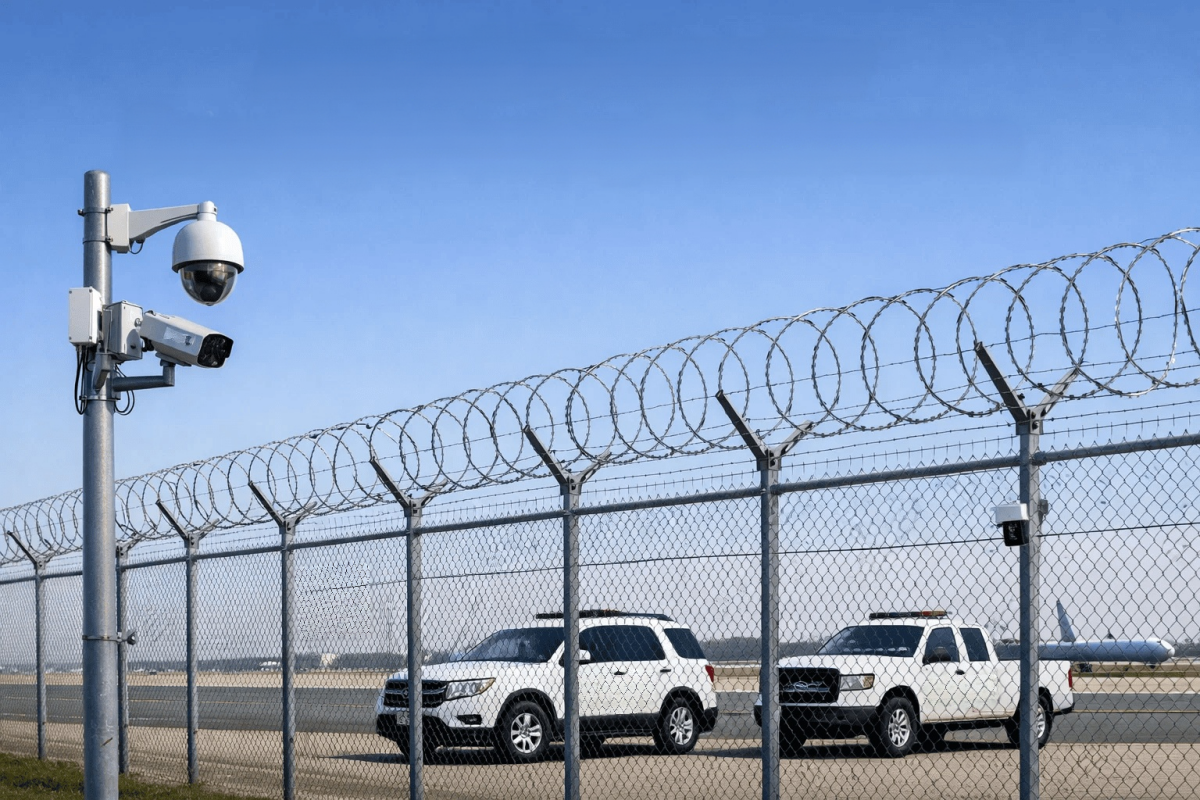
Flughafenzaun: Eine zuverlässige Sicherheitslösung für moderne Flughafengelände
Flughäfen gehören zu den sicherheitskritischsten Einrichtungen weltweit. Von Passagierterminals und Flugzeugabstellplätzen bis hin zu Start- und Landebahnen, Frachtbereichen, Treibstofflagern und gesperrten Zufahrtsstraßen – jeder Bereich eines Flughafens erfordert einen wirksamen Perimeterschutz. Ein Flughafenzaun ist nicht einfach nur eine Begrenzung – er ist ein wesentlicher Bestandteil des Flughafensicherheitssystems.
Ein gut konzipiertes Zaunsystem für Flughäfen trägt dazu bei, unbefugtes Betreten zu verhindern, das Eindringen von Wildtieren einzudämmen, wertvolle Anlagen zu schützen und einen reibungslosen täglichen Flughafenbetrieb zu gewährleisten. Für Flughafenbehörden, Auftragnehmer und Sicherheitsprojektmanager ist die Wahl des richtigen Flughafenzauns entscheidend für langfristige Sicherheit und Leistungsfähigkeit.
Was ist ein Flughafenzaun?
Ein Flughafenzaun ist ein Hochsicherheitszaunsystem, das zum Schutz von Flughäfen, Flugplätzen, militärischen Luftfahrtgebieten und damit verbundenen Sperrgebieten konzipiert ist. Im Vergleich zu herkömmlichen Zäunen müssen Flughafen-Zäune in der Regel höhere Festigkeit, bessere Sichtbarkeit, Kletterhemmung, Korrosionsbeständigkeit und Kompatibilität mit modernen Sicherheitssystemen aufweisen.
Zu den gängigen Optionen für Flughafenumzäunungen gehören:
Geschweißter Maschendrahtzaun
Maschendrahtzaun
358 Kletterschutzzaun
Palisadenzaun
Sicherheitszaun mit Stacheldraht
Streckmetallzaun
Temporäre Bauabsperrung für den Flughafen
Je nach Projektanforderungen können Flughafenumzäunungen hinsichtlich Höhe, Maschenweite, Drahtdurchmesser, Oberflächenbehandlung, Farbe, Pfostentyp und Sicherheitszubehör individuell angepasst werden.
Warum Flughafenumzäunungen wichtig sind
1. Verhinderung unbefugten Zugriffs
Auf Flughäfen gibt es zahlreiche Sperrbereiche, in denen unbefugtes Betreten ernsthafte Sicherheitsrisiken mit sich bringen kann. Ein stabiler Flughafenzaun bildet eine klare und sichere physische Barriere und trägt dazu bei, Eindringlinge daran zu hindern, Start- und Landebahnen, Vorfeldbereiche, Flugzeugwartungsbereiche und Frachtbereiche zu betreten.
2. Schutz von Flugzeugen und Flughafenanlagen
Flugzeuge, Bodenausrüstung, Navigationsanlagen und Treibstofflagersysteme sind wertvolle Vermögenswerte. Flughafenumzäunungen tragen dazu bei, diese Vermögenswerte vor Diebstahl, Vandalismus und äußeren Bedrohungen zu schützen.
3. Verringerung des Eindringens von Wildtieren
Das Eindringen von Wildtieren stellt eines der größten Risiken für die Flughafensicherheit dar. Vögel, Rehe, Hunde und andere Tiere können auf Start- und Landebahnen gelangen und Unfälle verursachen. Ein ordnungsgemäß installierter Flughafenzaun trägt dazu bei, den Zugang von Wildtieren zu erschweren und sorgt für sicherere Starts und Landungen von Flugzeugen.
4. Unterstützung des Sicherheitsmanagements an Flughäfen
Moderne Flughafenumzäunungen können mit Videoüberwachungskameras, Bewegungssensoren, Zugangskontrollschranken, Infrarot-Erkennungssystemen und Beleuchtungssystemen zusammenarbeiten. So entsteht eine integrierte Lösung für die Perimetersicherheit, die eine Überwachung rund um die Uhr ermöglicht.
Die wichtigsten Arten von Flughafenumzäunungen
1. 358 Kletterschutzzaun
Der Kletterschutzzaun 358 ist eine der beliebtesten Lösungen für die Flughafensicherheit. Die Bezeichnung “358” bezieht sich auf die Maschenweite: 3 Zoll × 0,5 Zoll mit Draht der Stärke 8. Durch die kleinen Maschen ist es schwierig, den Zaun zu überklettern oder mit gängigen Werkzeugen zu durchtrennen.
Vorteile:
Hervorragende Kletterhemmung
Gute Sichtbarkeit für Überwachungszwecke
Robuste Schweißkonstruktion
Geeignet für hochsichere Flughafengelände
Kompatibel mit Stacheldraht oder Stacheldrahtzaun
2. Flughafenzaun aus geschweißtem Drahtgeflecht
Geschweißte Gitterzäune zeichnen sich durch ein klares Erscheinungsbild, eine stabile Konstruktion und gute Sichtverhältnisse aus. Sie werden häufig zur Abgrenzung von Flughäfen, Servicebereichen, Frachtbereichen und zum Schutz von Sperrbereichen eingesetzt.
Vorteile:
Langlebig und kostengünstig
Einfach zu installieren
Erhältlich in verschiedenen Höhen und Maschenweiten
Pulverbeschichtet oder feuerverzinkt für Korrosionsbeständigkeit
3. Maschendrahtzaun für den Flughafen
Maschendrahtzäune sind eine bewährte und kostengünstige Lösung für große Umzäunungsprojekte an Flughäfen. Sie sind flexibel, einfach zu montieren und eignen sich für lange Zaunabschnitte.
Vorteile:
Kostengünstig für große Flächen
Flexible Struktur
Einfache Wartung
Kann mit Stacheldraht oder Rasierklingendraht kombiniert werden
4. Palisade-Flughafenzaun
Palisadenzäune wirken optisch abschreckend und zeichnen sich durch eine hohe Schlagfestigkeit aus. Ihre vertikalen Stahlpfähle erschweren das Überklettern und verbessern den Rundumschutz.
Vorteile:
Robuste Konstruktion zum Schutz vor unbefugtem Eindringen
Hohe Haltbarkeit
Geeignet für Bereiche mit hohem Risiko
Lange Lebensdauer
Die wichtigsten Merkmale eines hochwertigen Flughafenzauns
Bei der Auswahl eines Flughafenzauns sind folgende Merkmale wichtig:
Hohe Sicherheit
Flughafenzäune sollten gegen Überklettern, Durchschneiden und unbefugtes Betreten geschützt sein. Sicherheitszubehör wie Stacheldraht, Rasierdraht oder Y-förmige Pfosten kann den Schutz zusätzlich verbessern.
Hohe Korrosionsbeständigkeit
Flughafenumzäunungen sind häufig Regen, Wind, Sonneneinstrahlung, Feuchtigkeit und manchmal auch Küstenklimabedingungen ausgesetzt. Feuerverzinkung und Pulverbeschichtung tragen dazu bei, die Lebensdauer zu verlängern und die Wartungskosten zu senken.
Gute Sicht
Sicherheitsteams benötigen einen klaren Überblick für Streifengänge und die Kameraüberwachung. Maschendrahtzäune wie der kletterfeste Zaun 358 und geschweißte Maschendrahtzäune ermöglichen eine effektive Überwachung.
Individuell anpassbares Design
Verschiedene Flughäfen haben unterschiedliche Sicherheitsanforderungen. Zaunhöhe, Maschenweite, Pfostentyp, Toranlage, Lackfarbe und zusätzliche Sicherheitsvorrichtungen sollten individuell anpassbar sein.
Einfache Installation und Wartung
Ein praktischer Flughafenzaun sollte sich leicht aufstellen, reparieren und warten lassen. Modulare Zaunelemente können dazu beitragen, die Bauzeit und die Arbeitskosten zu senken.
Allgemeine Spezifikationen für Flughafenumzäunungen
Auch wenn die Spezifikationen je nach Projekt variieren können, gehören zu den gängigen Optionen für Flughafenumzäunungen:
Allgemeine Spezifikation für Artikel
Zaunhöhe: 2,0 m, 2,4 m, 3,0 m, 3,5 m, nach Maß
Drahtdurchmesser 4,0 mm, 5,0 mm, 6,0 mm, nach Maß
Maschenweite 76,2 × 12,7 mm, 50 × 100 mm, 50 × 200 mm, nach Maß
Pfostentyp: Vierkantpfosten, Rundpfosten, Pfirsichpfosten, Y-Pfosten
Oberflächenbehandlung: Feuerverzinkt, pulverbeschichtet, PVC-beschichtet
Farbe: Grün, Schwarz, Grau, Weiß, nach Wunsch
Zubehör: Stacheldraht, Stacheldrahtzaun, Tore, Klemmen, Schrauben
Für die Absicherung des Flughafengeländes werden bei vielen Projekten Zäune mit einer Höhe von mehr als 2,4 Metern gewählt, die zur Erhöhung der Sicherheit mit Stacheldraht oder Rasierdraht kombiniert werden.
So wählen Sie den richtigen Flughafenzaun aus
Die Wahl des richtigen Flughafenzauns hängt von mehreren wichtigen Faktoren ab:
Sicherheitsstufe
In Risikobereichen wie Start- und Landebahnen, Militärflugplätzen und Treibstofflagerbereichen kann der Einbau von 358 Kletterschutzzäunen oder Palisadenzäunen erforderlich sein.
Projektbudget
Maschendrahtzäune sind bei langen Begrenzungslinien oft kostengünstiger, während 358-Zäune bei höheren Kosten ein höheres Maß an Sicherheit bieten.
Umgebungsbedingungen
Für Flughäfen in Küstenregionen oder in feuchten Gebieten werden feuerverzinkte und pulverbeschichtete Zäune empfohlen.
Anforderungen an die Sichtbarkeit
Wenn die Videoüberwachung wichtig ist, sind Gitterzäune mit guter Sichtbarkeit besser geeignet.
Installationsbedingungen
Vor der endgültigen Planung sollten die Bodenbeschaffenheit, das Gelände, die Länge der Zaunlinie und die Standorte der Tore berücksichtigt werden.
Anwendungen für Flughafenumzäunungen
Flughafenumzäunungen können in vielen Bereichen eingesetzt werden, darunter:
Grenzen des Flughafengeländes
Sicherheitszonen an Start- und Landebahnen
Flugzeugabstellflächen
Frachtterminals
Kraftstofflager
Militärflughäfen und Luftwaffenstützpunkte
Wartungs- und Servicebereiche
Straßen mit Zugangsbeschränkungen
Temporäre Flughafenbaustellen
Eine komplette Zaunlösung für Flughäfen kann Zaunelemente, Pfosten, Tore, Sicherheitsaufsätze, Schutzvorrichtungen gegen das Untergraben sowie die Integration elektronischer Überwachungssysteme umfassen.
Warum sollte man mit einem professionellen Hersteller von Flughafenumzäunungen zusammenarbeiten?
Ein zuverlässiger Hersteller von Flughafenumzäunungen kann mehr als nur Standardprodukte anbieten. Die professionelle Betreuung umfasst die Projektplanung, Empfehlungen zu technischen Spezifikationen, maßgeschneiderte Fertigung, Qualitätskontrolle, Verpackung und Exportdienstleistungen.
Beim Import von Produkten für Flughafenumzäunungen sollten Käufer Folgendes beachten:
Materialqualität
Schweißfestigkeit
Dicke der Verzinkung
Haftfestigkeit von Pulverbeschichtungen
Ebenheit der Platte
Beitragsstärke
Verpackungsschutz
Erfahrung im Exportbereich
Die Wahl des richtigen Anbieters trägt dazu bei, Projektrisiken zu reduzieren, die Effizienz bei der Installation zu steigern und eine langfristige Sicherheitsleistung zu gewährleisten.
Fazit
Ein Flughafenzaun spielt eine entscheidende Rolle für die moderne Flughafensicherheit. Er schützt Sperrbereiche, verhindert unbefugten Zutritt, verringert Risiken durch Wildtiere und unterstützt moderne Überwachungssysteme. Ganz gleich, ob Sie einen 358-Kletterschutzzaun, einen geschweißten Maschendrahtzaun, einen Drahtzaun oder einen Palisadenzaun benötigen – die richtige Lösung sollte ein ausgewogenes Verhältnis zwischen Sicherheit, Langlebigkeit, Durchsicht und Kosten bieten.
Wenn Sie ein Projekt zur Absicherung des Flughafengeländes planen, kann Ihnen die Zusammenarbeit mit einem erfahrenen Hersteller von Flughafenumzäunungen dabei helfen, eine maßgeschneiderte, zuverlässige und kostengünstige Lösung zu finden.
